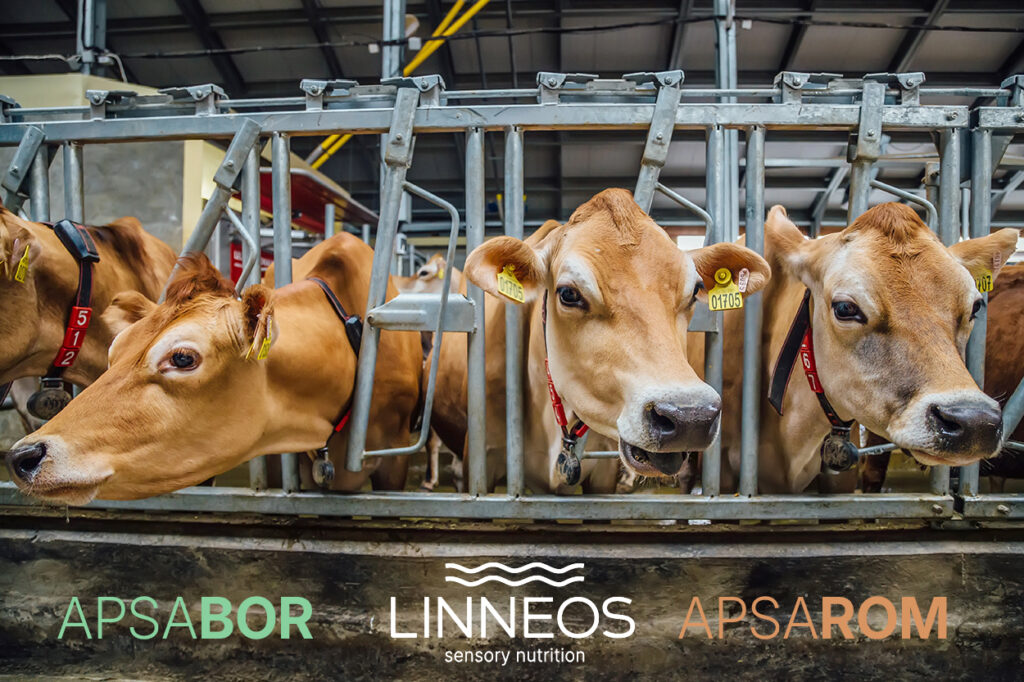
Functional palatability, cow traffic flow and production efficiency
In automatic milking systems, the formulation of the feed supplied at the robot plays a strategic role that goes far beyond its nutritional value. The sensory attractiveness of the feed directly influences visit frequency to the robot, voluntary concentrate intake and, consequently, overall system efficiency and milk production.
In these systems, where milking depends on voluntary animal behaviour, consistent intake per visit is a key factor in ensuring stable cow traffic and optimal robot performance.
Sweet taste and its impact on feed intake in dairy cows
Domestic ruminants, such as dairy cows, possess taste receptors for all basic flavours. Numerous studies have shown that sweet taste is perceived positively, as it is traditionally associated with the presence of soluble carbohydrates and fermentable energy—signals linked to the nutritional quality of the feed.
During demanding production stages—such as early lactation, transition periods or diets specifically formulated for automatic milking systems—this sensory stimulus can promote concentrate preference and contribute to more regular and predictable intake.
From a technical standpoint, the inclusion of natural sweeteners such as steviol glycosides allows the modulation of the feed’s sensory profile without increasing energy density or altering the nutritional matrix. Compared to more aggressive, non-natural sweeteners, stevia provides a clean, stable sweetness that is better accepted by the animal, making it suitable for formulations focused on intake control.
The role of aroma in robot visit behaviour
Beyond taste, olfactory stimulation plays a decisive role in approach behaviour towards the milking robot. The aroma of the concentrate acts as an anticipatory signal that influences the animal’s decision to visit the milking point.
The inclusion of functional aromas specifically developed for ruminants reinforces the overall sensory response and helps stabilise feed perception despite variations in raw materials or formulation. This stability is particularly relevant in automated systems, where intake regularity directly affects equipment efficiency and productivity.
Functional palatability: a technical tool for nutritionists
From the nutritionist’s perspective, the use of sweeteners and functional aromas should not be seen as a cosmetic solution, but as a technical tool to precisely adjust the sensory profile of feed intended for the milking robot.
A well-designed sensory strategy allows:
- Improved intake consistency per visit
- Optimisation of cow traffic flow to the robot
- Reduced intake variability
- Long-term sensory consistency of the concentrate
All without compromising the nutritional balance of the diet.
LINNEOS solutions for automatic milking systems
At LINNEOS, with the industrial and technical support of Grupo Andrés Pintaluba, we develop sensory solutions specifically designed for automatic milking systems in dairy cows.
APSABOR
A natural sweetener based on high-purity stevia, designed to enhance sweetness in a controlled way and improve feed palatability without adding sugars or modifying the nutritional profile.
👉 https://linneos.com/apsabor/
APSAROM
Micro-encapsulated functional aromas, specifically developed for dairy cows, which reinforce olfactory stimulation and stabilise concentrate acceptance at the robot.
👉 https://linneos.com/apsarom/
Used independently or in combination, APSABOR and APSAROM generate a sensory synergy that facilitates voluntary intake, improves cow traffic flow to the robot and helps optimise production performance.


