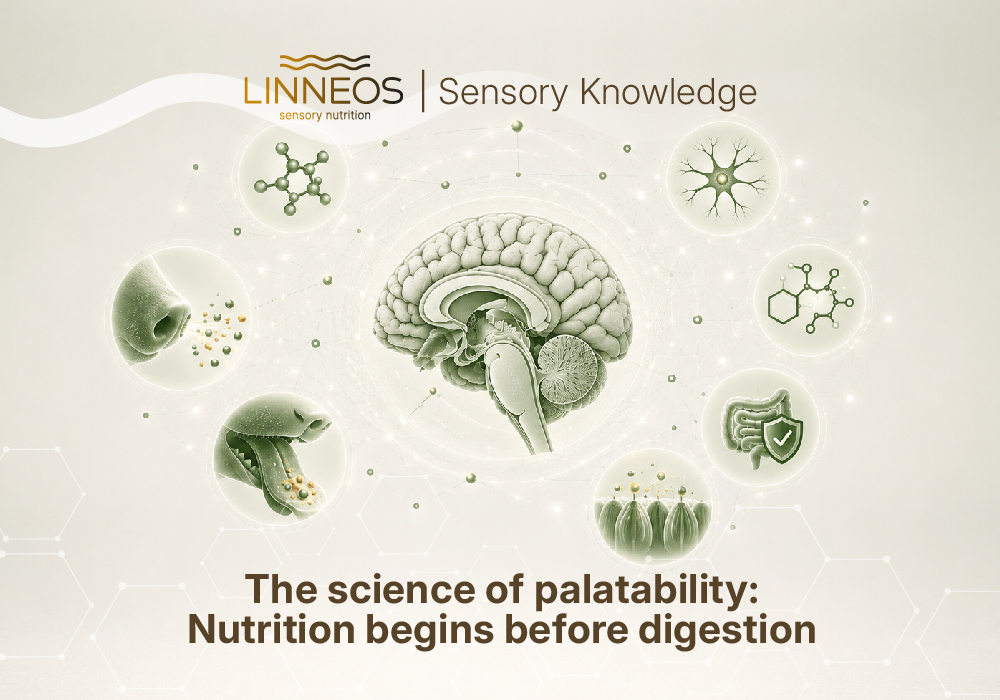
Palatability is the result of a complex network of chemical, sensory, neural and metabolic signals that allow the animal to decide whether a feed should be explored, accepted, consumed or rejected.
Before nutrients are digested, absorbed and used, the animal must decide if it is worth it to ingest the feed presented to it, which is the vehicle that contains those nutrients. This decision begins when the feed’s physical and chemical attributes are exposed to the animal’s sensory receptors.
- The first organ involved is the olfactory system, able to detect volatile molecules associated with the aromas of the diet.
- During ingestion, , the oral cavity, tongue, taste papillae, oral mucosa, saliva and specialized taste receptors participate in the sensory evaluation of the feed. At the cellular level, taste depends on gustatory receptor cells located within the taste buds. These cells express different receptors capable of detecting specific chemical signals: sweet, salty, sour, bitter and umami. Each animal species differs in the number, distribution and sensitivity of these receptors, making some species more responsive to certain tastes than others. For example, cats are particularly sensitive to umami-related signals, while their ability to detect sweetness is much more limited.
Umami plays a particularly important role because it is associated with the detection of protein-related compounds such as amino acids, peptides, glutamic acid and nucleotides. Umami receptors, belonging to the TAS1R receptor family, enable animals to recognize chemical signals linked to protein-rich ingredients. Finally, this sensory information is transmitted through neural pathways to the central nervous system, where it is integrated with sensory memory, compared with previous experiences and transformed into subsequent physiological responses.
Why is it important?
Palatability has an essential biological function: helping animals select the safest and most nutritious feed while avoiding potential risks associated with toxicity or disease.
From an evolutionary perspective, sensory organs are the animal’s primary tools for interpreting its environment. Some of the most common examples include:
- Bitter taste often acts as a warning signal for potentially toxic or undesirable compounds.
- Sweet taste may indicate the presence of rapidly available energy sources, particularly important in species or life stages where sugars play a significant nutritional role.
- Umami taste signals the presence of protein-related compounds, amino acids and nucleotides.
- Aromas help animals recognize whether a feed is familiar, safe, attractive or completely novel.
- Texture provides information about the physical structure, moisture, hardness and overall acceptability of the feed.
Each species interprets these signals according to its own biology, nutritional requirements and evolutionary history. However, one principle remains universal: feed must deliver sensory signals that are consistent with what the animal needs, recognizes and is willing to consume.
When sensory systems respond positively, they generate sensations of pleasure, acceptance and preference. These experiences are stored in sensory memory and influence future feeding decisions. Conversely, unfamiliar feeds with bitter, metallic, rancid or otherwise inconsistent sensory characteristics may trigger feed rejection, neophobia or reduced intake. Both positive and negative feeding experiences can be transmitted through social learning and, in some cases, even influence the feeding preferences of future offspring.
Why is it important for the animal nutrition industry?
For the animal nutrition industry, palatability is fundamental because even the most carefully formulated diet has no value if the animal refuses to consume it. When feed is rejected, nutrients never reach the animal, reducing feed efficiency, compromising health and increasing susceptibility to disease.
The importance of palatability lies in its ability to:
- Maintain and increase voluntary feed intake, supporting adaptation, animal welfare, productive efficiency and overall health.
- Improve product perception, as feed acceptance is one of the most important criteria considered by owners and producers when evaluating feed quality.
In this context, LINNEOS offers palatants, flavours and aroma solutions based on the principles of modern sensory nutrition. Our products are designed to stimulate natural sensory pathways, improve feed acceptance and support voluntary intake, particularly during nutritional, physiological or environmental challenges that may compromise animal health and performance.
Want to learn more about our sensory solutions and how they can improve your diets? Contact us!


